
INSIGHTS
PARTICIPATION IS NOT THE SAME AS EQUAL PAY
A recent report stated that female athlete NIL participation jumped 123% in a year. That growth is real, and it's worth celebrating. It's also only half the story.
By Amy Small, Cofounder, WIN | WIN·August 15, 2026
For most female college athletes, social impact in't an add-on to traditional NIL. It's the front door.
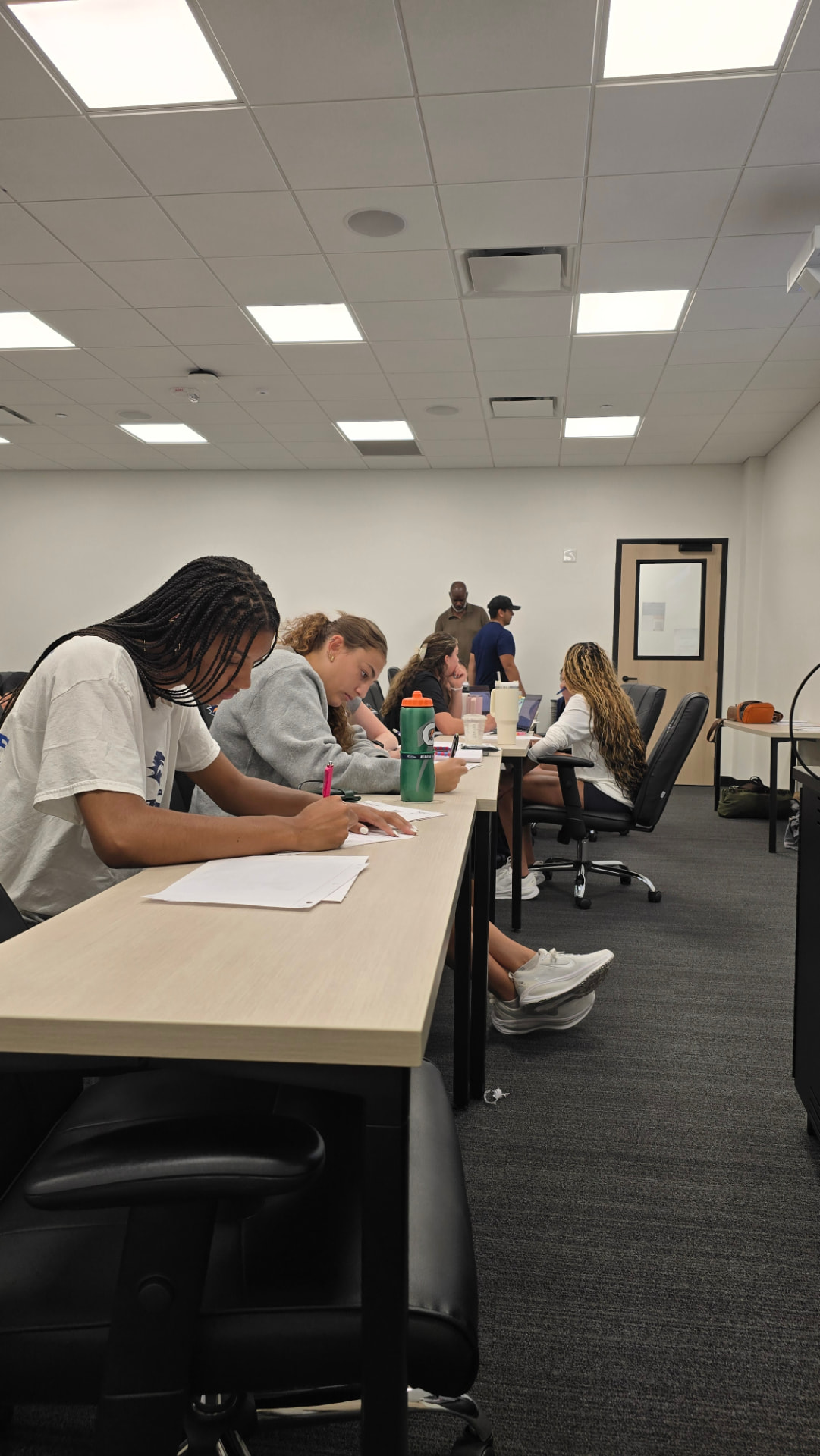
I just came back from San Antonio, where our WIN | WIN crew ran a social-impact workshop for the UTSA’s women’s volleyball team. The goal of the workshop is to help college athletes — especially women — recognize that they have an incredible opportunity to use their platforms for good, not just for product endorsements, and to walk them through developing a point of view and a pitch so they can advocate for the issues they actually care about.
It was an amazing experience, and talking to the girls on the team only reinforced the fact that our social impact angle isn’t an add-on to traditional NIL for many of these players. It is their first meaningful opportunity to get in the NIL door at all.
That gap between what gets reported about women’s NIL and what I’m hearing firsthand in a room full of athletes is the reason I keep coming back to the numbers.
~90%
The portion of revenue-share dollars still going to football and men’s basketball — while women make up about 32% of all NIL deal submissions.
WHAT GOT REPORTED
The growth number is real. Hell yeah for that.
In late July, Learfield put out a number that got major media attention: female athlete participation in its own NIL program jumped 123%, from 2,136 to 4,772, in a year. The AP ran the story, and ESPN, NBC affiliates, and others picked it up from there. According to the report, women’s basketball is now the third highest-earning sport in college NIL.
Participation growth like that is worth celebrating. More athletes in the market means more brands finding out that these rosters are worth talking to. But it's just one metric, reported without the other that would tell you what it's actually worth.
WHAT THE NUMBER DOESN’T SAY
It is easy to show a massive increase in something when the numbers start low.
What’s missing is any intel on what the women’s deals are worth. According to 2025-26 NCAA data, there are 94,935 female D1 athletes in the U.S. Learfield’s numbers account for roughly 5% of that.
The bigger challenge is that without average deal sizes or total compensation, there's no way to know if these gains are real or just lip service. Participation is not the same as pay.
94,935
female Division I athletes in the United States, per 2025-26 NCAA participation data.
NCAA, 2025-26
~5%
of that population is represented by the 4,772 athletes in the participation figure that made national news.
WIN | WIN analysis
8–12%
the share of the revenue-share pool going to women's sports, per Opendorse — the same firm calling female athletes the most valuable voices in college sports marketing.
Opendorse via On3, 2025
THE OTHER DATASETS
Every report tells the good half. Read them together and the gap shows up.
In May, FirstPoint USA ranked 2026’s top 10 collegiate female earners — from Flau’jae Johnson at $1.5M down to $299K for Jackson State guard Shelomi Sanders — and said pay escalation has “never been more lucrative — or more deserved.” One hundred percent true. But the equity lens is missing on this story, too. How many smaller deals did it take Flau’jae to get to that threshold, when one major deal would have reached it for many of her male peers?
Even Opendorse, whose data is the most complete in the industry, reports that women’s sports are only getting 8 to 12% of the rev-share pool — while also calling female athletes “the most valuable voices in college sports marketing.” The 12% share doesn’t mesh with the “most valuable” framing, and it's an easy thing to miss if you are only reading for the good news.
An April 2026 report from FanSided helps paint a more accurate picture of the imbalance, drawing on Sports Business Journal reporting: women make up about 32% of all NIL deal submissions, but football and men’s basketball still earn roughly 90% of rev-share dollars. And women’s teams average more deals per athlete than men’s do, with a fraction of the funding behind them.
32% of deal submissions
Women account for roughly a third of all NIL deal submissions — a level of activity that does not remotely match their share of the money.
~90% to two sports
Football and men's basketball still take the overwhelming majority of revenue-share dollars, leaving everyone else to split what is left.
More deals, less money
Women's teams average more deals per athlete than men's do, with a fraction of the funding behind them. Smaller deals mean more hustle to reach the same number.
No average deal size
The headline growth figures carry no average deal value and no total compensation. Without them, there is no way to tell real gains from lip service.
THE POINT
Two different metrics. Only one of them is getting highlighted.
Just like the corporate pay gap, the NIL gap needs to be noted too. Not because the growth numbers are wrong, but because participation rates and pay equity are two different metrics, and only one of them is getting highlighted right now.
So yes, let’s keep celebrating all the growth that’s happening — but not so much that it drowns out how far there’s left to go.
WHAT YOU CAN DO ABOUT IT
Stop playing from an outdated playbook.
The rooms I stand in are full of athletes whose value has nothing to do with whether a product endorsement ever comes their way. WIN | WIN packages social impact as sponsorable inventory, so brands can fund it, properties can sell it, and athletes across an entire department — not just the two sports taking 90% of the money — can get paid for advocacy they're passionate about. The model behind it is NILi: NIL for Impact®, and it's the same basic structure that sells endorsements, aimed toward purpose instead of transactions.
If you want to know what your own athletes care about before you build anything, start here: our student-athlete impact survey asks them directly. We’re happy to share the results back with you — just give us a shout.
SOURCES
- Female athletes surge in NIL deals as data reports a 123% jump — AP / NBC Los Angeles, July 28, 2026
- Why Women's College Sports are Leading the Charge in the NIL Race — FirstPoint USA, May 15, 2026
- Study: Women's sports driving record NIL growth as rev-share era begins — On3, November 3, 2025
- There is an untapped NIL economy in women's college basketball — FanSided, April 13, 2026
- NCAA Division I participation data, 2025-26. The 90% revenue-share and deals-per-athlete figures are reported by FanSided citing Sports Business Journal (September 16, 2024).
Want your whole roster in on the NILi conversation? Let’s map it together.
We build the activations, the inventory, and the nonprofit connections — all brand-funded, at no cost to the athletic department.